Las Vegas Goes Global: How Bally’s, Evoke and E-Vegas.com Could Redefine the World’s Gambling Capital
For generations, Caesars and MGM have battled for supremacy on the Las Vegas Strip. But the next great casino rivalry will not be decided by who owns the most valuable real estate in Nevada. The world is becoming one connected digital marketplace, and for the first time, the greatest gambling businesses can compete for an international audience without requiring that audience to travel to them. With Bally’s pursuing Evoke, the owner of 888, William Hill and Mr Green, and E-Vegas.com offering a digital destination with roots stretching back to 1997, an extraordinary opportunity is emerging: to take the Las Vegas experience worldwide while preserving the city’s identity as the spiritual home of casino entertainment.
Las Vegas Earned Its Place as the Gambling Capital of the World
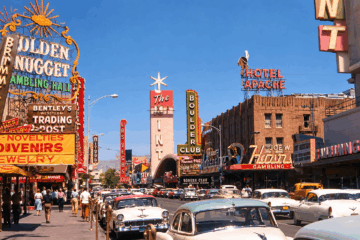
Las Vegas did not become the world’s most famous gambling destination by accident. Its reputation was built over generations through extraordinary ambition, investment, entertainment and the relentless pursuit of experiences that could not be found anywhere else.
From the earliest casino resorts to the spectacular properties that define the modern Strip, Las Vegas established an identity that transcended gambling itself. It became synonymous with possibility, excitement, luxury, entertainment and the freedom to experience something extraordinary.
Caesars Entertainment and MGM Resorts International helped shape that identity. Their rivalry, played out through magnificent casino resorts, luxury hotels, entertainment venues and internationally recognised brands, became one of the defining commercial contests in the history of the gambling industry.
For decades, their competitive advantage was inseparable from physical real estate. Ownership of prestigious locations, enormous gaming floors and exceptional hospitality infrastructure determined who could attract the greatest numbers of visitors and generate the most substantial revenues.
But the very thing that made Las Vegas extraordinary also imposed an unavoidable limitation.
The world had to come to Las Vegas.
A visitor from London, Tokyo, Sydney or Berlin could admire the city’s reputation, follow its entertainment industry and dream of experiencing its legendary casinos, but participating in the physical Las Vegas experience required travel, time and considerable expense.
That geographical barrier helped determine the traditional hierarchy of casino power.
Today, digital technology is fundamentally changing those rules.
The End of Geography as the Ultimate Measure of Casino Power
The Las Vegas Strip remains one of the world’s most valuable concentrations of gaming and entertainment assets, but physical property no longer determines the full extent of a gambling company’s commercial reach.
An online gaming business can potentially operate across multiple regulated markets without constructing a separate casino resort in each territory. Its technology, customer relationships, gaming products and marketing infrastructure can reach audiences far beyond the geographical boundaries of Nevada.
This does not eliminate regulatory restrictions. Online gambling remains subject to licensing, consumer protection, advertising requirements and the laws of individual jurisdictions. But it does remove the assumption that a business must own substantial physical casino property to become a major international gaming operator.
The implications are enormous.
The next generation of casino leadership could be determined by technology, brand recognition, customer acquisition, digital distribution and the ability to deliver trusted entertainment experiences across international markets.
For the first time, the world’s greatest casino businesses can increasingly compete for customers through the same global digital medium.
The casino floor is no longer the only arena in which the battle for gambling supremacy takes place.
The world itself is becoming the competitive stage.
Caesars Versus MGM: The Rivalry Has Never Gone Away
The historic rivalry between Caesars and MGM remains central to the identity of Las Vegas. Both companies continue to operate extraordinary physical casino businesses, and both understand that the future of gambling extends beyond the Strip.
MGM has already made significant moves into international digital gaming through its acquisition of LeoVegas in 2022 and its 50% ownership of BetMGM.
These investments demonstrate MGM’s determination to translate its physical casino experience and international reputation into the digital economy.
But there is a fascinating twist in the continuing rivalry.
Part of the international gambling business once owned by Caesars Entertainment now sits within Evoke, the parent company of 888 Casino, William Hill and Mr Green.
When Caesars acquired William Hill in 2021, it subsequently retained the US operations while selling William Hill’s non-US business to 888 Holdings in 2022. That business became part of the group later renamed Evoke.
Consequently, Bally’s proposed acquisition of Evoke through Bally’s Intralot would bring substantial William Hill international operations, experience and technological capabilities formerly owned by Caesars into a new competitive structure.
Bally’s would not be acquiring Caesars’ current US casino operations, Caesars Digital or Caesars Rewards. Nevertheless, the international William Hill business provides a meaningful historical connection between the old Caesars empire and the emerging Bally’s–Evoke proposition.
The irony is remarkable.
For generations, Caesars and MGM competed through their ownership of the world’s most celebrated casino properties. Now, part of Caesars’ former international gambling business could help Bally’s challenge MGM’s digital expansion.
The rivalry has not disappeared. It is evolving into something far larger than the Las Vegas Strip.
Bally’s and Evoke: A New Challenger to MGM and LeoVegas
The agreed acquisition of Evoke by Bally’s Intralot, announced in June 2026 and still progressing as of the latest October update, represents a potentially significant consolidation of international gaming interests.
Evoke brings together some of the most experienced names in online gambling.
888 Casino has been associated with online gaming since 1997, accumulating decades of technological development and digital customer acquisition expertise. William Hill brings a gambling heritage dating back to 1934, alongside sportsbook operations and extensive experience across British and international markets. Mr Green adds further online casino expertise and established European market recognition.
Bally’s contributes its own casino operations, gaming heritage, entertainment experience and wider digital interests, including the Gamesys businesses associated with brands such as Virgin Games, Jackpotjoy and Monopoly Casino.
The proposed combination would unite businesses with complementary strengths across physical gaming, online casinos, sports betting, technology and customer relationships.
Based on the companies’ announced 2025 pro forma figures, the combined operation would represent approximately €3.2 billion in annual net revenue, although successful integration and the achievement of projected financial benefits remain important challenges.
MGM has LeoVegas and BetMGM. Bally’s could have Evoke’s 888, William Hill and Mr Green alongside its wider gaming portfolio.
Both would possess substantial digital gaming capabilities, established brands and the potential to reach customers across regulated international markets.
But there is one further element that could transform the commercial proposition.
A destination.
E-Vegas.com: The Digital Destination That Could Bring the Entire Experience Together
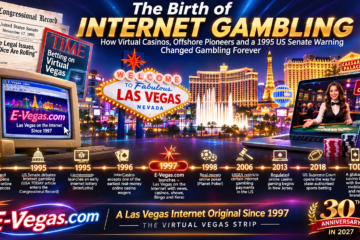
Established in 1997, E-Vegas.com embodies an idea that has become increasingly relevant as gambling and entertainment have moved online.
Las Vegas should not be confined to a geographical location when its identity, reputation and commercial appeal are recognised throughout the world.
E-Vegas.com has the potential to become a digital destination connecting the international audience with the experiences that made Las Vegas famous.
Its proposition extends beyond online casino gaming. The wider Las Vegas experience encompasses hotels, entertainment, shows, attractions, restaurants, travel, sporting events and the extraordinary culture surrounding the world’s most celebrated gambling destination.
This creates a strategic distinction between a casino operator and a destination platform.
A casino operator concentrates primarily on attracting customers to its own products. A destination platform can engage consumers earlier, helping them discover the wider range of experiences, services and businesses available to them.
A visitor researching a Las Vegas holiday might discover accommodation, live entertainment and attractions. A consumer comparing licensed online casinos might find independent reviews, game information and relevant operators available in their jurisdiction. Someone interested in the history and spectacle of Las Vegas could discover experiences they had never previously considered.
These different customer journeys can be connected through one recognisable digital identity.
And that identity is E-Vegas.com.
E-Vegas.com could be the destination. Bally’s could provide the casino and entertainment experience. Evoke could provide the established online gaming brands, technology and international infrastructure.
Together, those elements could support a broader commercial ecosystem capable of connecting the physical heritage of Las Vegas with the international reach of digital entertainment.
Such a partnership or acquisition has not been announced. It remains a strategic opportunity rather than an existing corporate arrangement, but the complementary nature of the assets makes the proposition worthy of consideration.
Las Vegas Does Not Have to Lose Its Crown to the Internet
Perhaps the most important aspect of this transformation is that Las Vegas does not need to surrender its identity as the gambling capital of the world simply because gambling is becoming increasingly digital.
The city earned that reputation through generations of investment, innovation, entertainment and extraordinary commercial achievement.
The emergence of international online casinos should not automatically mean that the industry’s cultural centre must shift away from Nevada.
Instead, digital technology offers an opportunity to extend the Las Vegas identity beyond the geographical limitations that once restricted it.
The physical city remains the original destination, with its legendary resorts, spectacular entertainment and irreplaceable atmosphere. But a digital destination such as E-Vegas.com could help connect that heritage with an international audience.
Las Vegas would no longer need to depend exclusively on attracting visitors to the desert to remain relevant to the worldwide gambling industry.
Its identity could travel digitally, reaching consumers who may never set foot on the Strip while continuing to inspire those who dream of visiting.
Las Vegas earned its crown in the physical world. E-Vegas.com could help carry that identity into the digital world.
This is not about replacing the real Las Vegas. It is about making the broader Las Vegas experience accessible to a much larger international audience.
The physical destination and the digital destination could complement one another, allowing the city to remain central to the industry’s cultural identity even as commercial competition expands globally.
For the First Time, the Greatest Casinos Must Compete on One Global Stage
The most extraordinary consequence of the digital revolution is the possibility of bringing the world’s leading gambling businesses into a shared competitive environment.
Historically, casinos were separated by geography. A casino in Las Vegas competed within a different physical marketplace from one in London, Macau, Monte Carlo or elsewhere.
Their customers, regulatory environments and commercial opportunities were often determined by where those businesses were located.
Digital technology changes the nature of that separation.
Within markets where online gambling is legal and regulated, consumers can increasingly compare competing operators through the same digital channels. Established casino groups, international betting brands and newer technology-led businesses must compete on the quality of their products, customer experience, trust, entertainment and value.
Physical size alone cannot guarantee victory.
A spectacular casino resort may command enormous prestige, but its digital offering must still compete with specialist online operators that have spent decades developing technology and understanding customer behaviour.
A famous name may attract attention, but sustained success depends on the quality of the experience delivered.
This creates an extraordinary opportunity for both established casino giants and ambitious challengers.
MGM, Caesars, Bally’s, 888, William Hill, LeoVegas and other international gaming businesses are increasingly participating in a marketplace where historical geographical advantages are less decisive.
The playing field is not perfectly level. Operators face different licensing restrictions, financial resources and market conditions. But the fundamental competitive environment is becoming more interconnected.
And a digital destination capable of bringing those experiences together could occupy a valuable position at the centre of that transformation.
The World Comes Together at E-Vegas.com
The ultimate ambition for E-Vegas.com is not simply to become another online casino comparison website or a promotional channel for one gambling operator.
It is to establish a digital destination through which the wider world can discover the gambling and entertainment experiences associated with Las Vegas.
That vision does not require every casino to belong to the same corporation. In fact, the presence of competing operators could make the destination more useful and commercially attractive.
A genuinely international gaming and entertainment destination would provide opportunities for different businesses to compete for consumer attention while allowing visitors to explore relevant products and experiences through one platform.
MGM could continue to compete with Caesars. Bally’s could challenge both through its growing gaming interests. Evoke’s brands could compete with LeoVegas and other international operators.
The rivalry would remain, but the arena would change.
Instead of competing solely for physical visitors to particular casino properties, businesses would increasingly compete for the attention of international audiences discovering entertainment and regulated gaming online.
For consumers, this could mean greater choice, more accessible information and opportunities to compare experiences without geographical distance being the first obstacle.
For operators, it could mean exposure to new audiences and commercial opportunities beyond their traditional markets.
For Las Vegas, it could mean preserving its extraordinary identity while extending its influence into the digital economy.
And for E-Vegas.com, it represents the possibility of becoming the meeting point between the world’s most famous gambling destination and the international industry it helped inspire.
Could Bally’s, Evoke and E-Vegas.com Become the Ultimate Global Gaming Combination?
The commercial logic is compelling.
Bally’s understands the casino industry and the appeal of Las Vegas. Evoke contributes decades of online gaming experience, established technology and internationally recognised brands, including the former Caesars-owned William Hill international operations.
E-Vegas.com offers an established Las Vegas digital identity with the potential to connect gaming, entertainment, hospitality and travel through a single destination.
A properly structured partnership could combine these strengths without requiring the construction of another enormous physical casino resort.
The opportunity would be to attract audiences through relevant content, connect them with appropriately licensed operators and entertainment providers, and develop lasting commercial relationships across multiple industries.
It would require substantial investment, technological development, effective marketing, regulatory compliance and measurable commercial performance. There is no guarantee that such a combination would surpass MGM, Caesars or other major operators.
But it could offer a differentiated competitive strategy: rather than attempting to outbuild the established casino giants, it could seek to outperform them in digital discovery, international distribution and customer engagement.
The physical casino would remain important. The digital destination would expand the opportunity.
And the name connecting those worlds could be E-Vegas.com.
The Future of Gambling Belongs to the World — But Its Spiritual Home Remains Las Vegas
The great casino rivalry between Caesars and MGM helped define an era in which physical property, spectacular resorts and geographical location determined much of the industry’s commercial hierarchy.
That era is not over, but it is no longer the whole story.
MGM’s investment in LeoVegas and BetMGM demonstrates that the established casino giants recognise the importance of international digital gaming. Bally’s proposed acquisition of Evoke could create another formidable competitor, bringing together established brands, technology and experience that includes part of the former Caesars international gambling business.
E-Vegas.com could add a different dimension: a digital destination that connects the worldwide audience with the broader Las Vegas experience.
For the first time, the world’s leading casinos have the opportunity to compete for international audiences through an increasingly connected digital marketplace, rather than relying primarily on the customers who can physically reach their properties.
The greatest gambling businesses will still compete. The historic rivalries will continue. New challengers will emerge, and established operators will defend the reputations they have spent generations building.
But the world no longer has to travel to one particular stretch of Nevada to participate in the wider digital gaming economy.
Las Vegas can retain the identity it earned as the world’s most famous gambling destination while embracing a future in which its influence extends far beyond the desert.
The next king of casino may not be determined by who owns the most prestigious address on the Strip. It may be determined by who delivers the most compelling experience, reaches the broadest lawful audience and builds the strongest relationships with consumers across the world.
Las Vegas built the stage. Caesars and MGM became legends upon it. Bally’s and Evoke could help reshape the competition. E-Vegas.com could become the digital destination that brings the world together.
For generations, the world came to Vegas.
Now, the vision is for Vegas to reach the world.
One destination. A world of experiences. The greatest names in gambling competing for the attention of an international audience.
The whole world, together at E-Vegas.com.
E-Vegas.com — Vegas Is Closer Than You Think.
Editorial disclosure: This article is a forward-looking strategic opinion piece. The Bally’s Intralot acquisition of Evoke was announced in June 2026 and remained subject to completion as of the referenced October 2026 update. No acquisition, investment or strategic partnership involving E-Vegas.com and Bally’s, Evoke, MGM or Caesars is asserted or implied to have been agreed. Online gambling availability varies by jurisdiction and is subject to applicable licensing and regulation.
Strengthen the opening with a sharper thesisReduce repetition across the digital sections